Car windows are designed to protect passengers, provide visibility, and maintain structural integrity. However, many drivers wonder why their side window glass sometimes shatters completely instead of simply cracking. Understanding why this happens involves learning about the types of glass used in vehicles, their safety features, and preventative measures to reduce the risk of breakage.
Car windows are designed to protect passengers, provide visibility, and maintain structural integrity. However, many drivers wonder why their side window glass sometimes shatters completely instead of simply cracking. Understanding why this happens involves learning about the types of glass used in vehicles, their safety features, and preventative measures to reduce the risk of breakage.
Short Answer: Why Side Window Glass Shatters
Types of Automotive Glass
Understanding why side window glass behaves differently requires a look at the types of glass used in vehicles:
1. Tempered Glass
- Used for – Side windows, rear windows, and sometimes sunroofs.
- Characteristics – Stronger than ordinary glass and designed to shatter into small, blunt granules.
- Purpose – Reduces the risk of serious injury during impact while maintaining structural support.
2. Laminated Glass
- Used for – Windshields and, in some luxury vehicles, panoramic roofs.
- Characteristics – Two layers of glass bonded with a plastic interlayer. Cracks may appear, but the glass usually holds together instead of shattering.
- Purpose – Provides maximum structural integrity, protects passengers from ejection, and allows safe airbag deployment.
Why Side Window Glass Shatters
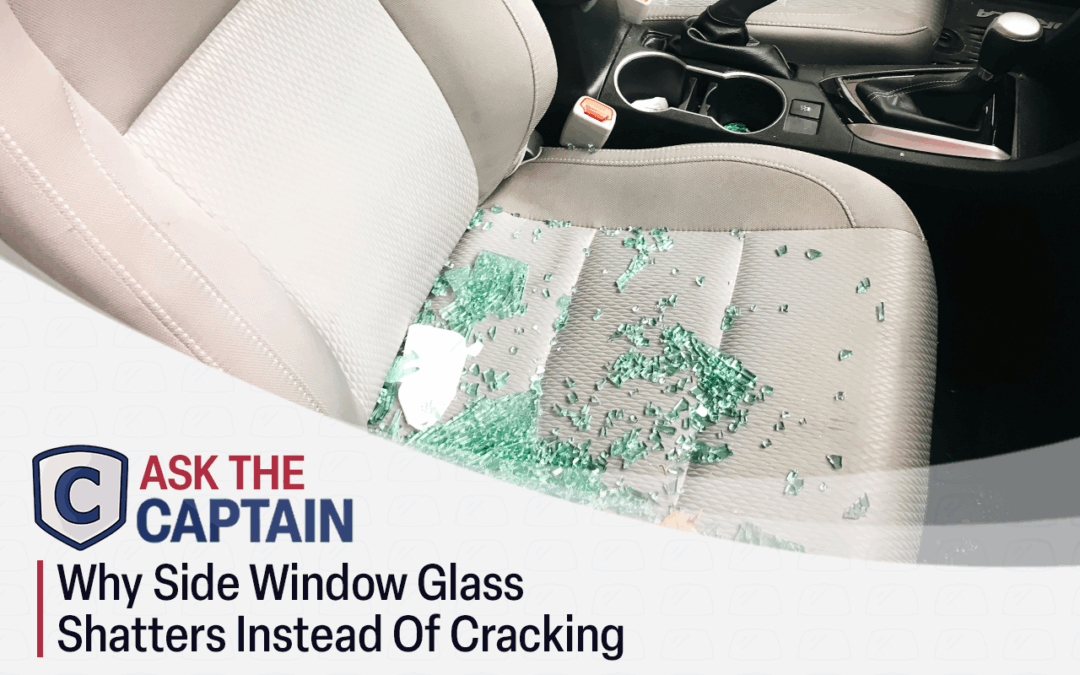
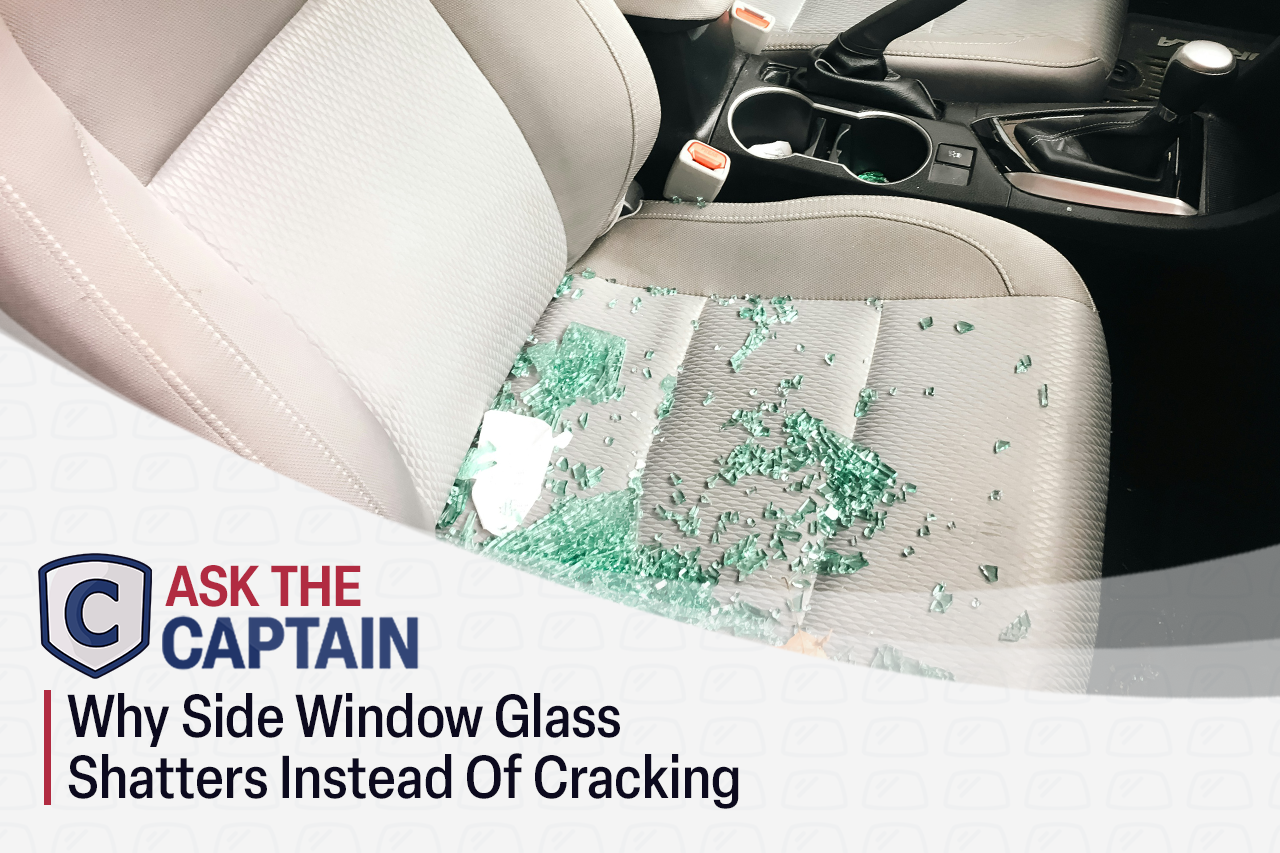
Side window glass shatters rather than cracks due to its tempered construction. Tempered glass is designed to fail safely. When subjected to force, heat, or impact, it breaks into hundreds of small, blunt pieces. This contrasts with laminated glass used in windshields, which may crack but generally stays in one piece.
Shattering can occur from:
- Impact from objects – Rocks, debris, or collisions with other vehicles.
- Temperature changes – Rapid heating or cooling can stress the glass.
- Manufacturing defects – Occasionally, glass contains internal stress points that make it prone to shattering.
- Accidents or vandalism – Side windows are more exposed and easier to break than windshields.
Purposes and Importance of Different Types of Glass
Different types of automotive glass serve distinct purposes:
- Side window glass – Protects passengers from wind, rain, and debris; designed to shatter safely to prevent deep cuts.
- Windshields – Maintain structural integrity, support airbags, and prevent passengers from being ejected.
- Rear windows – Often tempered like side windows; protect from debris while providing rear visibility.
Each type of glass is selected for specific safety functions. Understanding the differences helps drivers appreciate why side windows behave differently from windshields in accidents.
Safety Features of Side Window Glass
Side windows are engineered with several safety features:
- Shattering into blunt pieces – Prevents deep lacerations during accidents.
- Quick-release design – Allows passengers to escape quickly in emergencies, such as rollovers or submersions.
- Strengthened edges – Minimizes accidental breakage while driving, but still shatters under strong impact.
These features make side window glass a critical part of your vehicle’s overall safety system.
Preventative Measures to Avoid Glass Shattering
While side windows are designed to shatter safely, you can take steps to reduce the risk of damage:
- Avoid following large trucks – Rocks and debris are common causes of side window breakage.
- Park in safe, covered areas – Protects your vehicle from vandalism and environmental hazards.
- Don’t slam doors excessively – The force from slamming doors can stress tempered glass over time.
- Avoid extreme temperature changes – Sudden heating or cooling can create internal stresses in the glass.
- Regular inspections – Small chips or stress fractures can be repaired before full shattering occurs.
Taking these precautions can extend the life of your side window glass and reduce the likelihood of unexpected shattering.
What to Do If Side Window Glass Shatters
If your side window glass shatters, follow these steps:
- Stay safe – Avoid touching broken pieces with bare hands to prevent injury.
- Secure the vehicle – Cover the broken window with plastic or tape to protect the interior.
- Schedule a professional replacement – Certified technicians can install a new side window glass safely, ensuring structural integrity and proper alignment.
- Check electronics – Some side windows have integrated sensors or defrosters; confirm these are functioning after replacement.
- Clean up – Carefully remove all glass fragments from the interior to prevent injury or damage to upholstery.
Professional replacement ensures your side window glass is restored safely and in compliance with manufacturer standards.
The Importance of Replacing a Side Window
Replacing a damaged or shattered side window glass is critical for several reasons:
- Safety – A broken window leaves the vehicle vulnerable to injury from remaining shards or exposure to external hazards.
- Security – A missing or shattered side window allows easy access to your car, increasing the risk of theft.
- Weather protection – Rain, snow, dust, and debris can enter the vehicle, causing interior damage and reducing visibility.
- Electronics functionality – Modern side windows may include sensors, defrosters, or tinting, which require professional installation to work properly.
Even a small crack can worsen over time due to vibrations, temperature changes, or accidental contact. Prompt replacement restores the structural integrity of your vehicle and ensures passenger safety.
Final Thoughts: Understanding and Protecting Your Side Window Glass
Side windows may seem simple, but their design is critical for passenger safety. The reason side window glass shatters instead of cracking lies in its tempered construction. The tempered glass safety feature meant to prevent injury while maintaining quick escape options.
By understanding the types of glass used in vehicles, their purposes, and the preventive measures you can take, you can protect your car from unexpected damage. If your side window glass shatters, acting quickly to replace it with professional service ensures safety, comfort, and peace of mind.
For reliable, fast, and professional side window replacement, Captain Auto Glass offers certified technicians who handle every installation with care. Protect your vehicle and passengers by scheduling service today.